 Pawel Partyka
Space industry on Warsaw Stock Exchange is represented be 3 companies: Creotech Instruments (CRI.WA), Scanway (SCW.WA) and Liftero (LFR.WA). In a nutshell each of the companies occupies different part of cosmic industry space. Creotech builds the satellite and integrates the mission. Scanway builds the satellite's "eyes." (with intention to transition to imaginary data provider Data-as-a-service) Liftero builds the satellite's "engine."
They operate in different parts of the space value chain and are therefore more complementary than directly competitive.
Creotech Instruments and Scanway are listed on the Warsaw Stock Exchange's Main Market. Liftero, however, is currently listed on the NewConnect market, which means its availability varies across brokerage platforms.
| Company | Simplified role | What it sells | What it physically produces |
| Scanway S.A. | The eyes and image-processing system | Optical payloads for satellites and spacecraft; cameras for in-space monitoring; industrial machine-vision systems | Telescopes, satellite cameras, optoelectronics, imaging electronics and integrated industrial vision systems |
| Creotech Instruments S.A. | The satellite manufacturer and mission integrator | Complete satellites, satellite platforms, subsystems, mission integration and operations | Satellite platforms/buses, spacecraft electronics, power subsystems, harnesses and complete integrated satellites |
| Liftero S.A. | The engine and maneuvering system | Chemical propulsion systems for satellites | Thrusters and complete propulsion modules including tanks, propulsion hardware, control electronics and monitoring systems |
Scanway S.A. optical payloads and machine vision
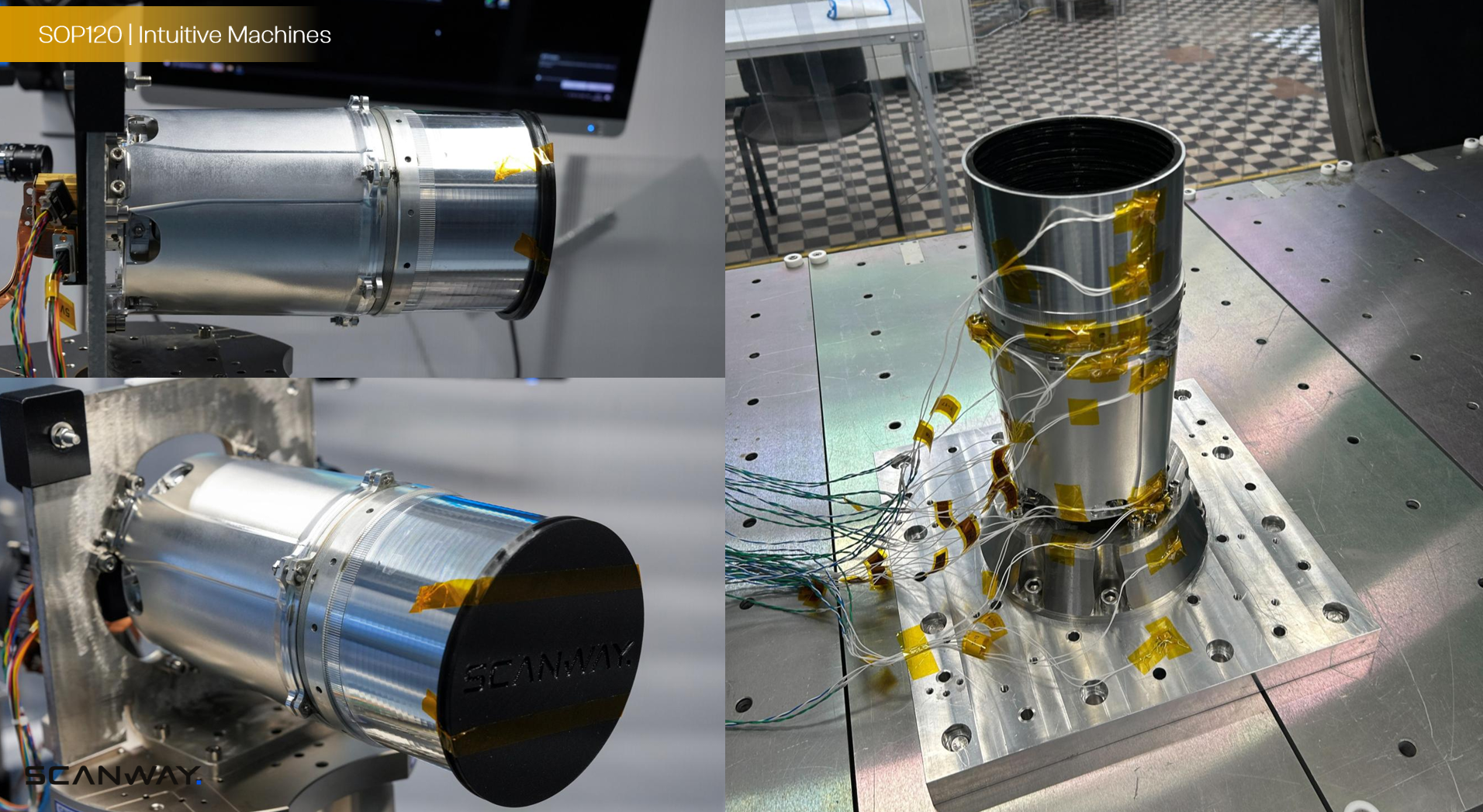
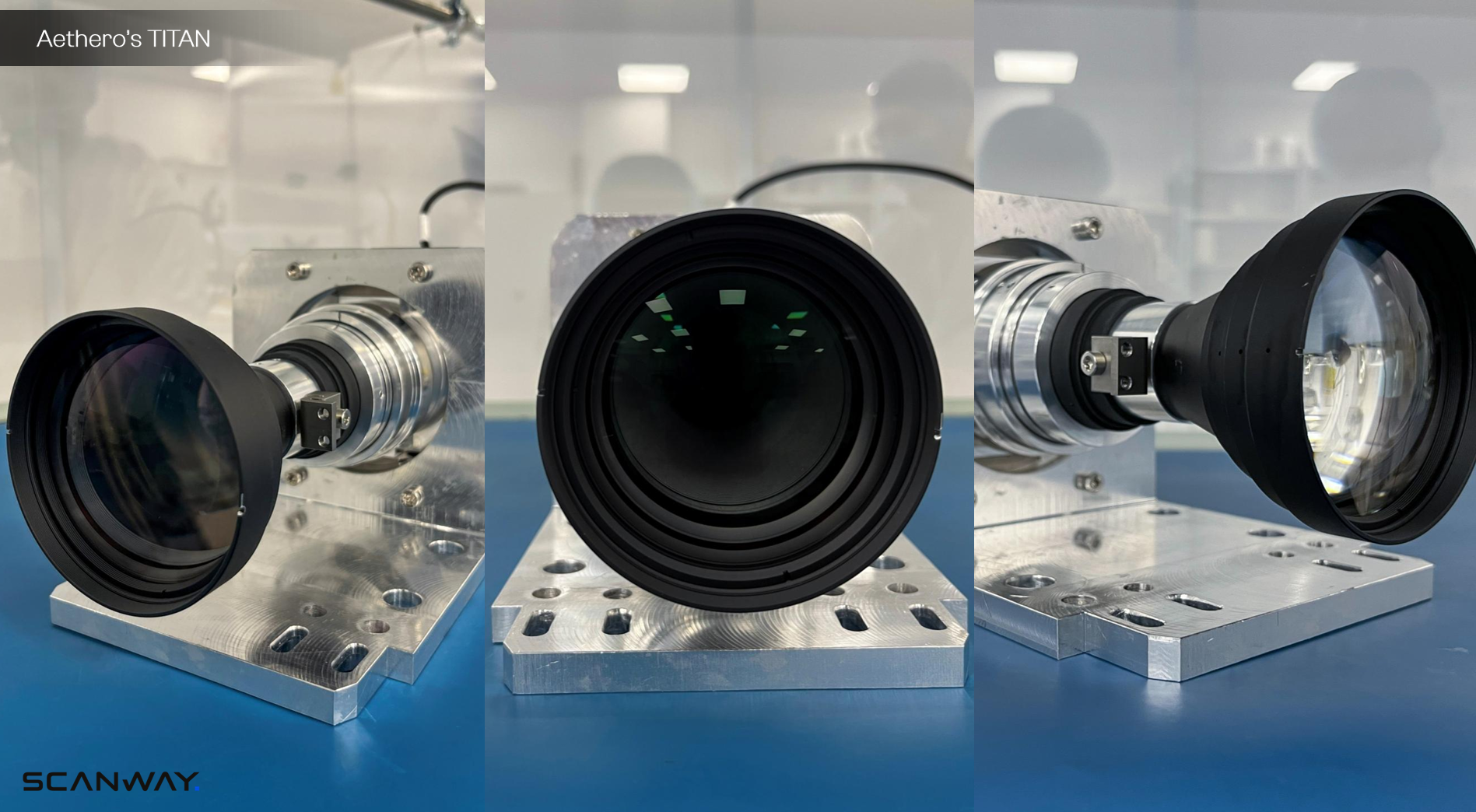
Scanway is fundamentally an optical-imaging company. Its main space products are instruments that allow a satellite or spacecraft to see, photograph and analyse objects. Its principal space product lines are:
- SOP — Scanway Optical Payload: optical telescopes/cameras used for Earth observation, lunar observation and other remote-sensing applications. The systems can operate in visible, near-infrared and shortwave-infrared spectral bands.
- SCS — Scanway Camera System: smaller supporting camera systems used for spacecraft monitoring, docking, servicing and observation of operations taking place in space.
- Image-processing software and electronics associated with these systems.
Scanway also has an industrial business, where it designs complete machine-vision systems for automated quality control. These use 2D, 3D, multispectral and hyperspectral cameras to detect defects, measure objects and monitor production processes. Its portfolio includes systems such as CUMULUS, STRATUS, NIMBUS and CIRRUS, together with the HYDRA image-processing platform.
In practice, however, Scanway has become increasingly space-focused. Its Q1 2026 report showed that 97% of sales came from the Space segment and only 3% from Industry.
Scanway assembles optical telescopes, satellite cameras, camera electronics, and complete imaging instruments for integration into third-party satellites or spacecraft. However, it currently sources optical elements from external suppliers, which is something the company aims to change by expanding its manufacturing capacity. It generally does not build the complete satellite platform itself.
Scanway also plans to move toward a data-as-a-service model, in which it would not only equip satellites with optical payloads but also commercialize the captured imagery and related analytics. Under this model, the company could potentially price its hardware more competitively while generating recurring revenue from the sale of satellite imagery and processed analytical data to multiple customers. They already discuss such agreement with one USA customers.
Creotech Instruments S.A. — complete satellites and space-system integration
Creotech operates at a higher level of the satellite value chain. It is primarily a satellite manufacturer, platform provider and prime mission integrator.
Its key proprietary product is the HyperSat modular satellite platform. Creotech can sell:
- a satellite platform onto which a customer's payload is integrated;
- a complete Earth-observation satellite;
- a complete satellite constellation;
- a turnkey mission covering design, registration, launch procurement, payload integration and satellite operations;
- individual spacecraft subsystems and electronics.
Examples of what Creotech manufactures include:
- HyperSat Nano and HyperSat Eagle satellite platforms;
- complete optical and SAR Earth-observation satellites;
- spacecraft electronics;
- solar panels;
- battery-management systems;
- electrical power subsystems;
- satellite harnesses;
- complete integrated satellites.
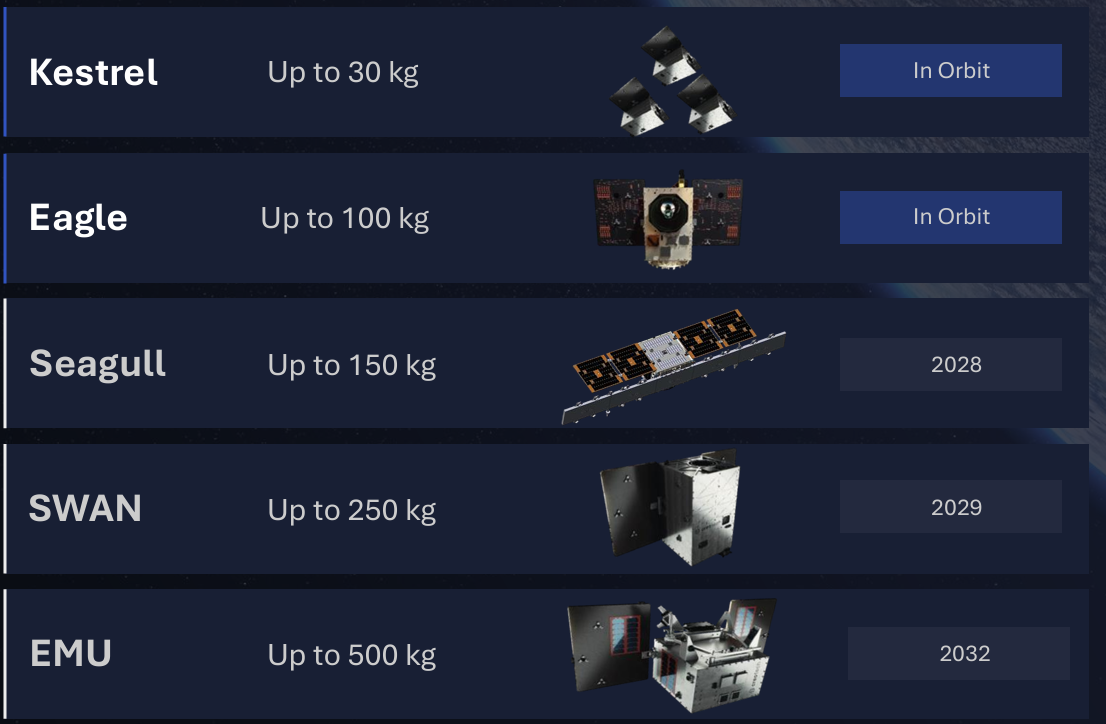
Creotech also provides geospatial-data services, UAV support and contract electronics manufacturing, although its current strategic focus is clearly on becoming a major European space mission integrator and satellite manufacturer.
We maintain full Creotech business analysis, which is available here.
Liftero S.A. — satellite propulsion systems
Liftero is much more specialised than either Scanway or Creotech. Its core business is satellite propulsion.
Its flagship commercial product is BOOSTER, a modular chemical propulsion system using non-toxic propellants: nitrous oxide (N₂O) as oxidiser and ethane (C₂H₆) as fuel. The current product family is designed for satellites approximately 20–500 kg in mass.
Depending on the configuration, BOOSTER can be used for:
- moving a satellite to its operational orbit;
- collision avoidance;
- station-keeping;
- rapid orbital manoeuvres;
- in-orbit satellite servicing and docking;
- controlled re-entry;
- constellation deployment and orbital logistics.
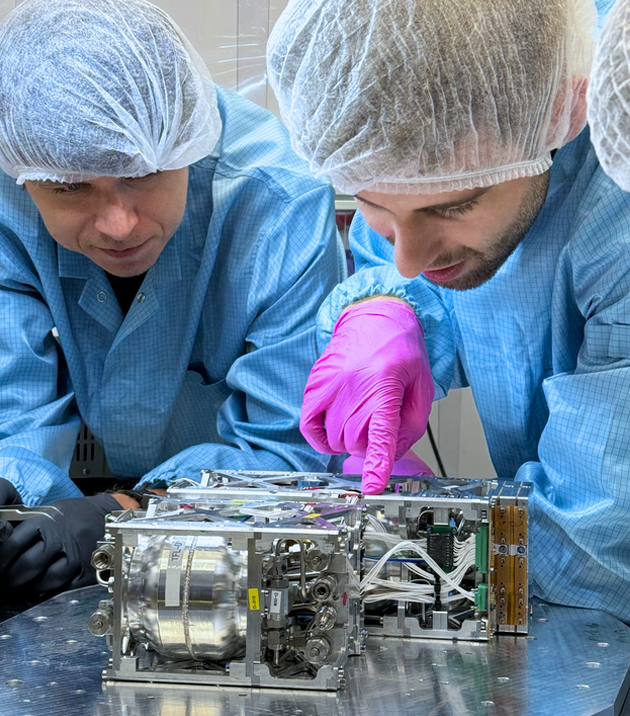
The product is not simply a standalone rocket nozzle. Liftero supplies a complete propulsion system, which can include the thrusters, propellant tanks, electronic control unit and health-monitoring equipment. The modular architecture allows different numbers and classes of thrusters to be configured for the mission.
Three companies barely compete with each other
A simplified satellite architecture might look like this:
Creotech satellite platform + Scanway optical payload + Liftero propulsion system
That is only a conceptual example, not a claim that one current spacecraft necessarily uses all three companies' product, but it accurately shows their positions.
Creotech vs. Scanway
There is some technological overlap in spacecraft electronics and data processing, but fundamentally:
- Creotech builds and integrates the spacecraft.
- Scanway provides the mission payload that captures optical data.
Indeed, the two companies have already worked together on missions including EagleEye and the PIAST constellation, where Scanway supplied optical instruments and Creotech was involved in the satellite platforms and system integration
Creotech vs. Liftero
These companies are even less directly competitive:
- Creotech needs propulsion systems for certain satellite missions.
- Liftero manufactures the propulsion technology that can be integrated into a satellite platform.
Thus, Liftero is potentially a supplier to companies operating at Creotech's level of the value chain.
Scanway vs. Liftero
There is almost no direct product overlap:
- Scanway specialises in optics, cameras and image data.
- Liftero specialises in propulsion and orbital mobility.
One of the most important tailwinds for the Polish space sector is the government's significantly increased commitment to the European Space Agency (ESA). At the 2025 ESA Ministerial Council, Poland increased its subscription by almost threefold to EUR 731 million for the 2026–2030 period, compared with the previous funding cycle. Under ESA's geographical return principle, approximately EUR 550 million of this contribution is expected to flow back to Polish companies and research institutions over the next three to four years through contracts and development programs. This substantial increase in available funding should expand opportunities for leading domestic space companies such as Creotech Instruments, Scanway, and Liftero, which are already active participants in ESA projects. The higher level of ESA investment is expected to support new satellite missions, optical payloads, Earth observation technologies, and other advanced space systems, providing a meaningful long-term growth catalyst for Poland's emerging space industry.
Another development strengthening Poland's position in space industry. is yhe establishment of the European Space Agency (ESA) Centre in Poland, together with the planned launch of a dedicated Polish space investment fund focused on space and dual-use technologies. Industry representatives from companies such as Creotech Instruments, Scanway and Centrum Badań Kosmicznych PAN view these initiatives as important steps toward improving access to capital, attracting international partners, and accelerating the commercialization of Polish space technologies.
Valuation is demanding
Of the three companies, only Creotech Instruments is currently profitable, having reported PLN 19.9 million in net profit for 2025. The other two companies have yet to reach break-even. At current valuations, investors are already pricing in significant future growth expectations for all three companies. As a result, the Price-to-Sales (P/S) ratio is the most appropriate valuation metric for comparing these businesses, as current earnings do not yet provide a meaningful basis for comparison.
| Ratio | Scanway | Creotech | Liftero |
| Price/Sales | 13.2x | 13.7x | 20.3x |
| Market cap | 444 PLN m | 2,009 PLN m | 266 PLN m |
Conclusion
Finally, comparison of orders backlog, yearly manufacturing capacity and price range per unit sold of all 3 companies.
| Company | Orders backlog (July 2026) | Yearly manufactuting capacity | Price range for unit sold |
| Scanway | PLN 53.5 mln | 10-15 | € 200k - 2 mln |
| Creotech | PLN 587 mln | 10 (40 in 2029 with up to 500kg mass) | € 10 mln - 100 mln(including mission design, production, testing and logistics) |
| Liftero | ~PLN 3 mln | 80 (~ mid 2027) | € 100k - 1 mln |